
Car tires in Cedar Rapids, IA
We sell used and new car tires and install them, all-season tires included, and we service touring, summer, run-flat and spare tires too. We cover all sizes and have a big stock, so tell us the size on your tire's sidewall and ask about tires in it.
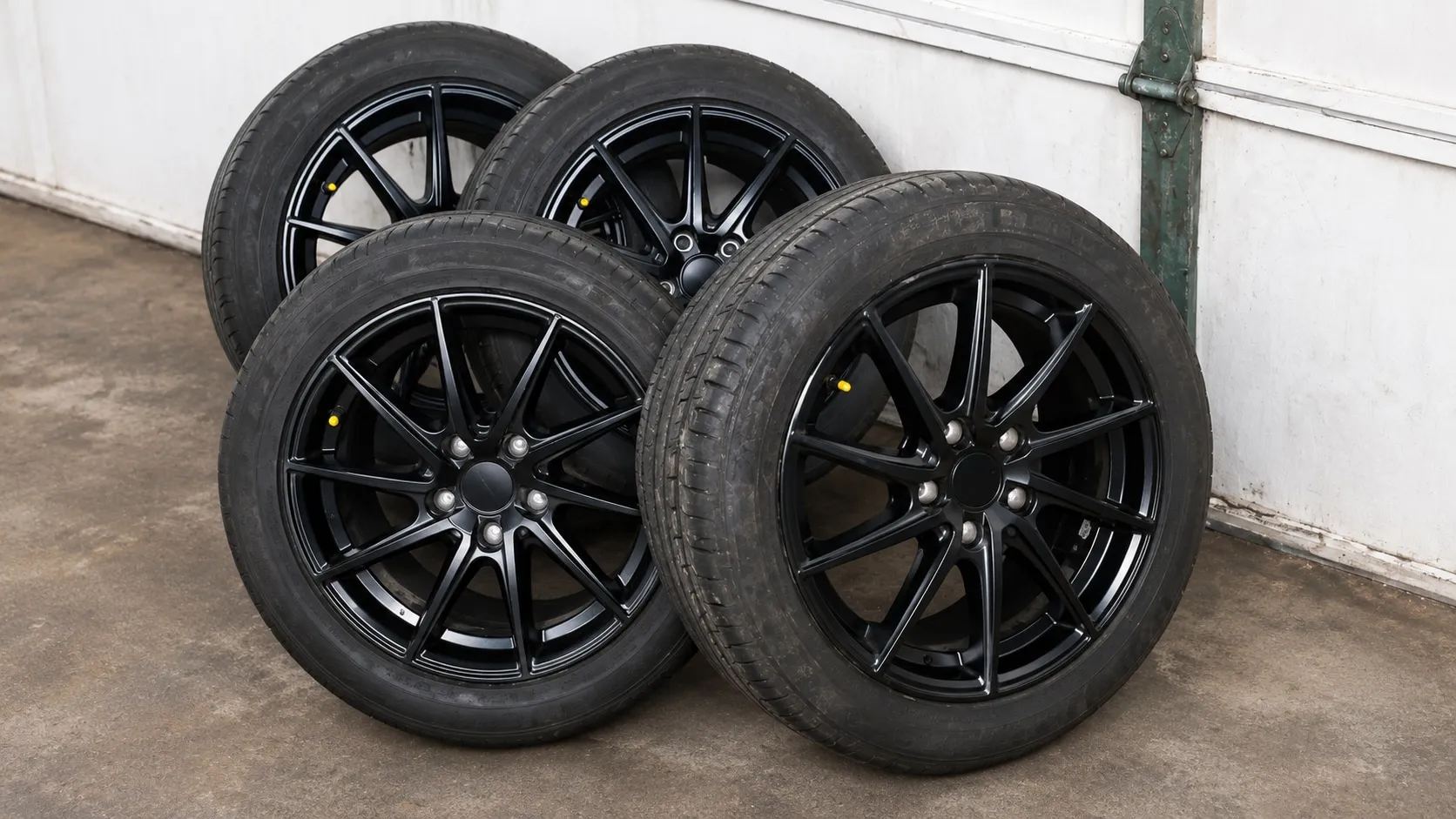
Why Arcadia Tire Co.
- 40 years of automotive experienceBetween the shop workers
- In business since 2018
- Open Saturdays 1pm-5pm
- 30-day guarantee
- Wheelchair-accessible entrance and parking lot
Choosing car tires
The right car tire is one in your car's size and load rating, made for the roads and weather you drive in. Touring and all-season tires suit everyday driving and rain, winter tires suit snow and ice, and a tougher tread suits gravel and dirt roads. Some tires add puncture resistance. Which tire lasts longest depends on its tread rubber and build as much as on how you drive and how the tires are kept inflated and rotated, so no tire is best for every car. We sell all the brands, so ask about the ones that suit your car.
Where car tires are made
The country a tire was made in is marked on its sidewall, and it depends on the maker and the model: one maker can build the same line in more than one country. So no single list of car tires made in the USA or in Canada fits every tire. Read the sidewall of the tire you are looking at, or ask us about the one you have in mind.
All-season tires
All-season tires are made for dry roads, rain and light snow, which is why most cars wear them all year. We sell and install them. They are what a car that stays on the road through a mild winter needs; for deep snow and ice, winter tires grip better, and our winter tires page covers them.
An all-season tire looks much like any other car tire: a tread of grooves cut with thin slits that bite on wet and snowy roads. Its sidewall usually says All Season or M+S, which is also how to tell it from a summer tire. How long a set lasts depends on how you drive, the roads, and how the tires are kept inflated and rotated, so no single figure fits every car. Buy a new set when the tread nears the wear bars, not on the first wet or snowy day. When winter tires come off in spring, the all-season set goes back on; our seasonal tire changeover page covers the swap. Which all-season tire is quietest depends on its tread design and rubber. This site does not say which all-season tires are quietest.
Touring tires
Touring tires are made for comfortable, quiet, steady driving on paved roads, which is why many sedans, minivans and crossovers wear them. We service touring tires. Which one is quietest depends on its tread design and rubber, and how many miles one lasts depends on the tire and the driving, so no figure fits them all. An all-season touring tire is a touring tire made, like an all-season tire, for dry roads, rain and light snow. Against an all-season tire, a touring tire is the one made for comfort and quiet on paved roads. This site does not say which touring tire is best. They come in kinds:
- Grand touring tires lean toward a smooth, quiet ride with some added grip.
- Sport touring tires steer and corner more sharply than a touring tire, with some of its comfort.
- Highway touring tires are made for steady highway driving, such as a long commute.
- Comfort touring tires aim for the softest, quietest ride.
- Premium touring tires are a maker's top touring line, usually with more features than its basic one.
Summer tires
Summer tires are made for warm roads, wet or dry, and give their best grip and steering there; that is what they are good for. We service summer tires. Their rubber is made for warmth: as the weather cools it stiffens and the tire loses grip, and in snow and ice a summer tire is the wrong tire. How cold is too cold depends on the tire, so ask the shop about yours. While the road is warm a summer tire grips well in rain.
A summer tire has fewer, wider tread grooves and little siping than an all-season tire, and its sidewall carries no snow marking, which is how to tell the two apart; some makers call them three-season or warm-weather tires. Some cars wear a staggered set, with wider tires on the rear axle than on the front. How long a set lasts depends on the rubber, how you drive and how the tires are kept inflated and rotated, and soft summer rubber can wear faster than touring rubber, so no single figure fits. Replace them when the tread reaches the wear bars. Which summer tire suits your car depends on its size and how you drive; ask us about work on the summer tires you have.
Putting summer tires on and taking them off
Summer tires go on in spring once the weather has settled warm, and they come off for winter tires before the roads turn cold enough to stiffen the rubber; most drivers swap before the cold sets in rather than after the first snow. A set that has lost grip in the cold is a sign the swap is late. We do seasonal tire changeovers, and our seasonal tire changeover page covers them.
Storing summer tires
Clean and dry the tires, cover them, and keep them somewhere cool and dry, out of direct sun and away from motors and anything that gives off heat. Mark each tire's position on the car before it comes off, so the set can go back on the way it wore.
Run-flat tires
A run-flat tire has stiff, reinforced sidewalls that hold the car up when the tire loses air, so you can drive a short distance at reduced speed to a safe place or a shop instead of stopping at once. How far and how fast depends on the tire and the car; the owner's manual and the tire's maker give the limit. We service run-flat tires. From outside one looks like a regular tire with a thicker sidewall, often marked Run Flat or RFT, and inside it is rubber over reinforced sidewall inserts. Many cars that come with them have no spare.
Some BMW, Mercedes-Benz, Lexus and Mini cars leave the factory on run-flat tires; our BMW tire sizes and Mercedes tire sizes pages cover those makes. Drivers who like them value not changing a tire at the roadside. Drivers who dislike them usually point to a firmer ride and to a tire driven flat that cannot be repaired. Whether you need run-flats depends on your car: if it came with them and has no spare, regular tires in the same size and load rating need a plan for a flat, such as a spare, a repair kit or a tow.
Repairing and replacing run-flat tires
Whether a run-flat tire can be repaired depends on its maker and on the damage, and a tire driven on while flat is often damaged inside where you cannot see it. Makers differ, so no yes or no fits every run-flat tire. For a particular tire, ask the shop. Replace a run-flat tire when its tread is worn to the wear bars, or when its maker says a tire that ran flat is finished.
Spare tires: kinds and sizes
A spare is either full-size, matching the car's road wheels, or a compact temporary spare, often called a donut, that is narrower and smaller so it fits in the trunk well. The two are different tires, and no spare fits every car, so spares are not universal. The spare wheel is the wheel and tire together. To find the right one for your car, read the size on the sidewall of the spare you have, on the placard inside the driver's door or in the owner's manual; a spare must also match the car's wheel bolt pattern. How much narrower and smaller a compact spare is differs from car to car, and its size is on its sidewall. We service spare tires.
Using a spare tire
A compact spare, also called a donut, is a temporary tire made to get you to a shop, not for everyday driving, so use it as the owner's manual says; its sidewall and the manual give the speed and distance limits for your car. It feels and sounds different on the road because it is narrower and built differently. A spare ages in the trunk: it loses air and its rubber ages whether or not it has been used, so check its pressure and date code before you need it, and no single figure says how long one lasts. To put a spare on, lift the car with its jack at the points the manual shows, remove the lug nuts and the flat wheel, mount the spare on the studs and tighten the nuts.
Car tires compared with truck, SUV, trailer and motorcycle tires
Light truck (LT) tires have stiffer sidewalls and higher load ranges for hauling. SUV tires are sized and rated for a heavier vehicle than a car. Low-profile tires have short sidewalls, which many cars wear on large wheels. Trailer (ST) tires are built only to carry load behind a vehicle, which is why car tires are not made for trailers and trailer tires are not made for cars. Motorcycle tires have a round profile for leaning into turns, so a car tire on a motorcycle does not meet the road the way a motorcycle tire does. Tyre is the British spelling of tire.
How car tires work and are measured
A car tire is an air-filled cushion: the air pressure carries the car's weight, the tread grips the road and the sidewall flexes over bumps. Most car tires are tubeless, so the bead seals against the rim and holds the air without an inner tube. A size such as 205/55R16 gives the width in millimetres, the sidewall height as a percentage of that width, R for radial and the wheel size in inches. Your car's size is on the sidewall of the tires on it now and on the placard inside the driver's door. Inside, a tire is layers of rubber over steel belts and fabric cords. Tyre is the British spelling of tire; the two words mean the same thing.
When car tires need replacing
Replace a tire when its tread is worn to the wear bars moulded into the grooves, when the sidewall has cuts, cracks or bulges, or when it is old enough that the rubber is cracking. A tire has no printed expiry date; the date code on the sidewall gives the week and year it was made, and age is a reason to look it over even when the tread is deep. How long a set lasts depends on how you drive, how the tires are kept inflated and rotated, and the roads, so no single figure fits every car. Buy new tires before the tread reaches the bars, not after, and rotate them on the schedule your car's maker sets. A burst is usually the end of a tire run low on air, overloaded or already damaged, and tires that squeal in slow turns are often low on air.
Car tires: questions, answered
- Where can I find car tires near me?
- We sell and install car tires, used and new, at the shop, right outside downtown Cedar Rapids and half a block from Highway 380. The address is 507 1st Ave SW. We are open Mon-Fri 10am-6pm, Sat 1pm-5pm, Sun closed.
- How much do car tires cost?
- What a set costs depends on the tires' size and type (all-season, for example), the vehicle they fit, whether they are new or used, and how many you need. We service run-flat, summer and spare tires, run-flat tires for a BMW included, so for the work on those ask the shop. The price is not on this site. Call (319) 200-2002 and ask.
- What should my car tire pressure be, and when do I add air?
- The pressure on the placard inside the driver's door or in the owner's manual, checked when the tires are cold; add air when they read below it. Summer, all-season and run-flat tires all follow the same placard. The number on the sidewall is the tire's maximum, not the pressure to run. We check tire pressure and add air; our tire pressure check and air page has more.
- Are touring tires worth it?
- They are worth it if comfort, low road noise and even wear matter more to you than sharp handling, which is what they are made for. A driver who wants sharper steering may prefer a sport touring tire.
- What temperature should you not drive at on summer tires?
- No single temperature fits every summer tire, so the tire's maker is the one to ask. Summer rubber stiffens as the weather cools and the tire loses grip, and in snow and ice it is the wrong tire; swap to winter tires before the cold sets in.
- Can a run-flat tire be repaired?
- That depends on the tire's maker and on the damage, and a run-flat driven on while flat is often damaged inside. Ask the shop about the tire you have.
- Do you sell spare tires?
- We service spare tires, and we sell used and new tires of many types. Call the shop with your spare's size, read off its sidewall, and ask about work on it.
- How long can you drive with a spare tire?
- A compact spare is a temporary tire made to get you to a shop, so use it only as far and as fast as your owner's manual and the spare's sidewall allow; our Using a spare tire section has more.
- Do you install the car tires you sell?
- Yes. We sell car tires, mount them and install them; our tire installation and tire mounting pages have more.
- Can I get car tires and rims together?
- We sell wheels and rims as well as car tires; our wheels and rims page covers them.
- Do you do brakes too?
- Yes. We do brake repair; our brake repair page has more.
- Do you sell used car tires?
- Yes. We sell used and new car tires; our used tires page covers used tires, and our new tires page covers new ones.
- Why do car tires squeal when turning?
- A tire squeals in a turn when it is asked for more grip than it has. It may be low on air, worn, hard with age, or the turn may be faster than the road allows. Check the pressure against the placard inside the driver's door and look the tires over for wear and cracks; we check tire pressure and add air, and our tire pressure check and air page has more. A squeal can also come from parts other than the tires.
- How often should car tires be rotated?
- Follow your car maker's schedule in the owner's manual. Rotating moves each tire to another position so all four wear evenly, and the pattern depends on whether the car is front-, rear- or all-wheel drive. We do tire rotation; our tire rotation page has more.
- What can I do if my car has no spare tire?
- Many cars that come on run-flat tires have no spare, because the tire carries the car a short way when it loses air; the section on run-flat tires says how far depends on the tire and the car. If you want a spare for a car that has none, what fits depends on the car's make, model and year. A spare must match the car's wheel bolt pattern, as the section on spare tires, kinds and sizes explains.
- What are all-weather tires?
- All-weather tires sit between all-season tires and winter tires: they carry the three-peak mountain snowflake symbol on the sidewall, which marks a tire made for severe snow, and they are made to be worn all year. Which is better for you, an all-season or an all-weather tire, depends on how much snow and ice you drive on; our winter tires page covers the difference.
- Which run-flat tires are the best?
- No one run-flat tire is best for every car. The best one for your car is the one in the size and load rating on your tire's sidewall or the placard inside the driver's door, in a tread that suits your roads and weather. We service run-flat tires, so ask about work on yours.
- Are run-flat tires good in snow?
- How a run-flat tire grips in snow depends on its tread and rubber, not on its being run-flat: an all-season run-flat is made for light snow, and for deep snow and ice a winter tire grips better, some of which come in run-flat versions. Our winter tires page covers winter tires.
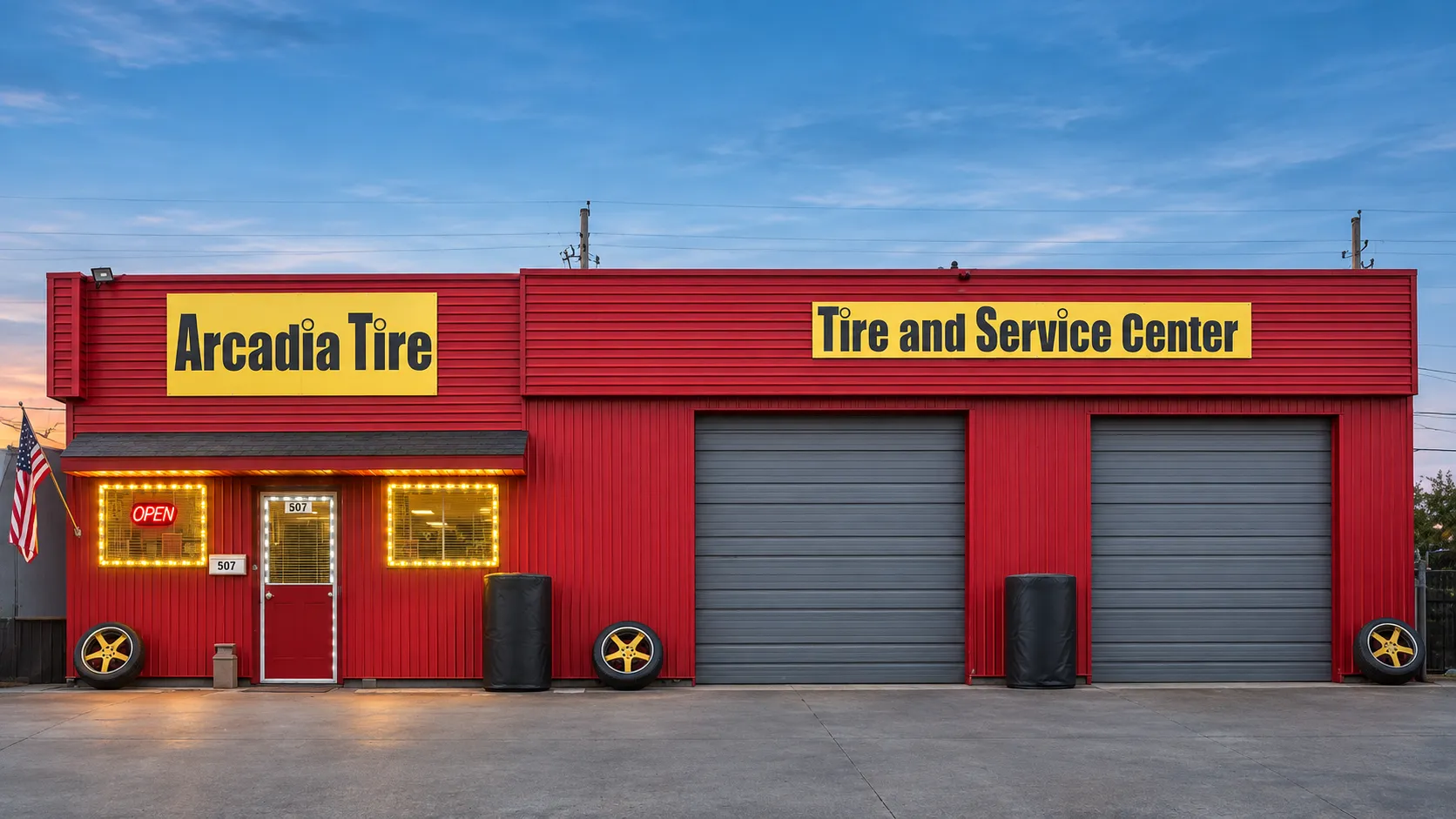
Need tires or a repair in Cedar Rapids?
Call (319) 200-2002, Mon-Fri 10am-6pm and Sat 1pm-5pm, or request an estimate online.