
New tires in Cedar Rapids, IA
We sell new tires and install them, and we sell all the brands. We cover all sizes and have a big stock, so tell us the size on your tire's sidewall and ask about new tires in it.
Why Arcadia Tire Co.
- 40 years of automotive experienceBetween the shop workers
- In business since 2018
- Open Saturdays 1pm-5pm
- 30-day guarantee
- Wheelchair-accessible entrance and parking lot
Any brand you are looking for
We sell all the brands. If you are searching for a tire by its brand name, ask us with the brand and your size. We cover all sizes and have a big stock.
How tires work
A tire holds the vehicle's weight on a cushion of air and puts a small patch of rubber on the road at each wheel: only that patch grips, steers and brakes. The tread's grooves clear water and bite into loose ground, and the tire's body flexes to soak up bumps.
What comes with a new tire
A new tire starts with its full tread depth, how deep the grooves run from the top of the tread to the bottom, which differs by type and maker and is given in the maker's details; it falls as the tire wears. A new tire is mounted on its wheel and then balanced, so the wheel and tire roll without shaking; we do tire balancing. After that a new tire needs air at the pressure on the vehicle's placard and a rotation now and then.
Why new tires can sound or feel different at first
A new tire's tread blocks have sharp edges and its surface is smooth from the mold, so a new set can sound a little different, and feel slicker than a worn set, until the tread wears in. How long that takes differs by tire and by how it is driven.
How tires should look and wear
A healthy tire wears evenly across the tread, with the same depth on both edges and in the middle, and no cuts, cracks or bulges in the sidewall. Wear bars, shallow ridges across the grooves, show where the tread is worn out. Uneven wear points to a cause beyond the tire, such as inflation or the car's suspension. Feathering, where tread blocks wear smooth on one edge and sharp on the other, is one such pattern: worn tread cannot be put back, so the cause has to be found or the next tire wears the same way.
Rotating and balancing tires
Rotating moves each tire to another position on the car so all four wear evenly. The pattern depends on whether the car is front-, rear- or all-wheel drive, whether it is an SUV or a car, and whether the tires are directional; the car maker's manual gives it. Balancing fixes small weights to the wheel so it spins without shaking. We do tire rotation and tire balancing; our tire rotation page and tire balancing page cover them.
New tires on the front or the back?
When only two new tires go on, tire makers commonly advise putting them on the rear axle, front-wheel drive or not, so the rear tires grip at least as well as the front on a wet road. The tires with the better tread matter most at the rear, and your car maker's advice for its own drivetrain comes first.
Directional tires
A directional tire has a tread pattern made to roll in one direction, shown by an arrow on its sidewall, and it must be mounted facing that way. A tire with no such arrow is not directional and can be mounted either way. Whether a directional tire is better depends on what it was designed for, such as shedding water or snow, and not on the direction itself.
When it is time for new tires
New tires are needed when the tread is worn to the wear bars, when a tire is cut, cracked or bulging, or when it is old enough that the rubber cracks. The same signs apply to car tires and SUV tires; our SUV tires page covers SUV tires. The time to change tires is set by how the tires look, not by a date or a mileage alone, and rotating them on your car maker's schedule helps them wear evenly.
How old a tire is
A tire's age is in its date code, four digits on the sidewall that give the week and year it was made. Rubber ages whether or not a tire is driven, so an old tire can crack with tread left on it. How old a tire may be, new or fitted, depends on how it was stored and used, so no single age fits every tire. When you buy, it is fair to ask how recent a tire is.
How long tires last
How long a set of tires lasts, in years or in miles, depends on the tread rubber, the roads, how you drive and how the tires are kept inflated and rotated, so no single figure fits every tire or every driver. A mileage figure for a tire is its maker's estimate, not a promise for your car, and replacing a tire is decided by its tread and condition rather than by mileage alone. Radial tires, the usual build for cars, are no exception.
Flat tires and repairs
A tire goes flat from a puncture through the tread, a leaking valve, a leak at the bead where the tire meets the rim, or damage to the sidewall. Whether a flat can be repaired depends on where the damage is and how big it is: a tire with sidewall damage, a bulge or a large cut is judged by the person who inspects it, and a badly worn tire may be better replaced. We do flat tire repair; our flat tire repair page covers it.
Radial tires and how tires are made
A radial tire has its cord plies running straight across from bead to bead, under steel belts at the tread, so the sidewall flexes while the tread stays flat on the road. Radials are the usual build for car tires; older tires were bias-ply, with cords crossing each other. A tire is made by building its rubber, cord, steel belts and bead wire onto a drum and pressing it in a mold under heat, which sets the tread pattern. Tires have changed over the years in this way, and in their tread designs and rubber.
Choosing new tires
A good choice is a tire in your vehicle's size and load rating, made for the roads and weather you drive in. No tire is best on the market for every car, and the tires to avoid are those that do not fit your size, load rating or use. To compare two tires, compare their type, tread and the grades printed on the sidewall, and ask us about the ones in your size.
Comfort and a smooth ride
How comfortable a tire is depends on its sidewall height, its tread design and its rubber: a taller sidewall and a softer compound soak up more of the road, and a quiet tread cuts noise. The tire that gives the smoothest ride for you is one in your car's size, built as a touring or comfort tire.
Do more expensive tires make a difference?
A higher price often buys more features, such as a quieter tread, longer-wearing rubber or extra grip in the wet. A more expensive tire is better for you only where those features match how and where you drive; it is not better for every car, and a tire that does not fit your size or load rating is wrong at any price.
Choosing by season
All-season tires suit a mix of conditions, summer tires are for warm roads, and winter tires are for snow and ice, which is why the best winter tire and the best summer tire are different tires. This site does not say which winter tire is best. An all-weather tire sits between all-season and winter tires and carries the three-peak mountain snowflake symbol; an all-season tire does not. Our car tires page covers all-season and summer tires, and our winter tires page covers winter tires.
Tires for SUVs and off road
SUV tires are chosen by your SUV's size and load rating and by the roads it runs, and off-road tires add a tougher, more open tread. The size for an off-road tire comes from the wheel and the vehicle, as for any tire. Our SUV tires page and our off-road tires page cover them.
Tire size, width and height
A tire's size is printed on its sidewall: its width, the height of its sidewall as a share of that width, and the diameter of the wheel it fits. A wider tire puts more rubber on the road, which can help grip on dry roads, and costs fuel economy and some grip in standing water. How wide a tire you can fit depends on the rim and on the room in the wheel well, so the size that fits is the one your car maker lists; a tire counts as wide only against the size the car came with. A tire's height comes from its width, its sidewall share and its wheel diameter, so a taller tire has a bigger overall height.
Reading your tire's sidewall
The sidewall of the tires on your car tells you which tires you have: its size, its type, its load and speed ratings, a date code and, on many tires, treadwear, traction and temperature grades, which is how tires are graded. Read it to ask for a tire in the same size.
Where tires are made
The country a tire was made in is marked on its sidewall, and it depends on the maker and the model: one maker can build the same line in more than one country. So no single answer names the country that makes tires, or a country whose tires fit every car.
Looking after tires
What protects tires is air at the pressure on the vehicle's placard, regular rotation, a look at the tread and sidewalls for damage, and shade when a spare or stored set sits. A dressing sprayed on a tire changes how it looks and does not change how it wears, so conditioning a tire comes down to those habits.
Financing through Klarna and Affirm
We offer financing through Klarna and Affirm; the shop does not finance customers itself. This site names no terms or rates; ask us about it, and see our financing page.
New tires: questions, answered
- Where can I find new tires near me?
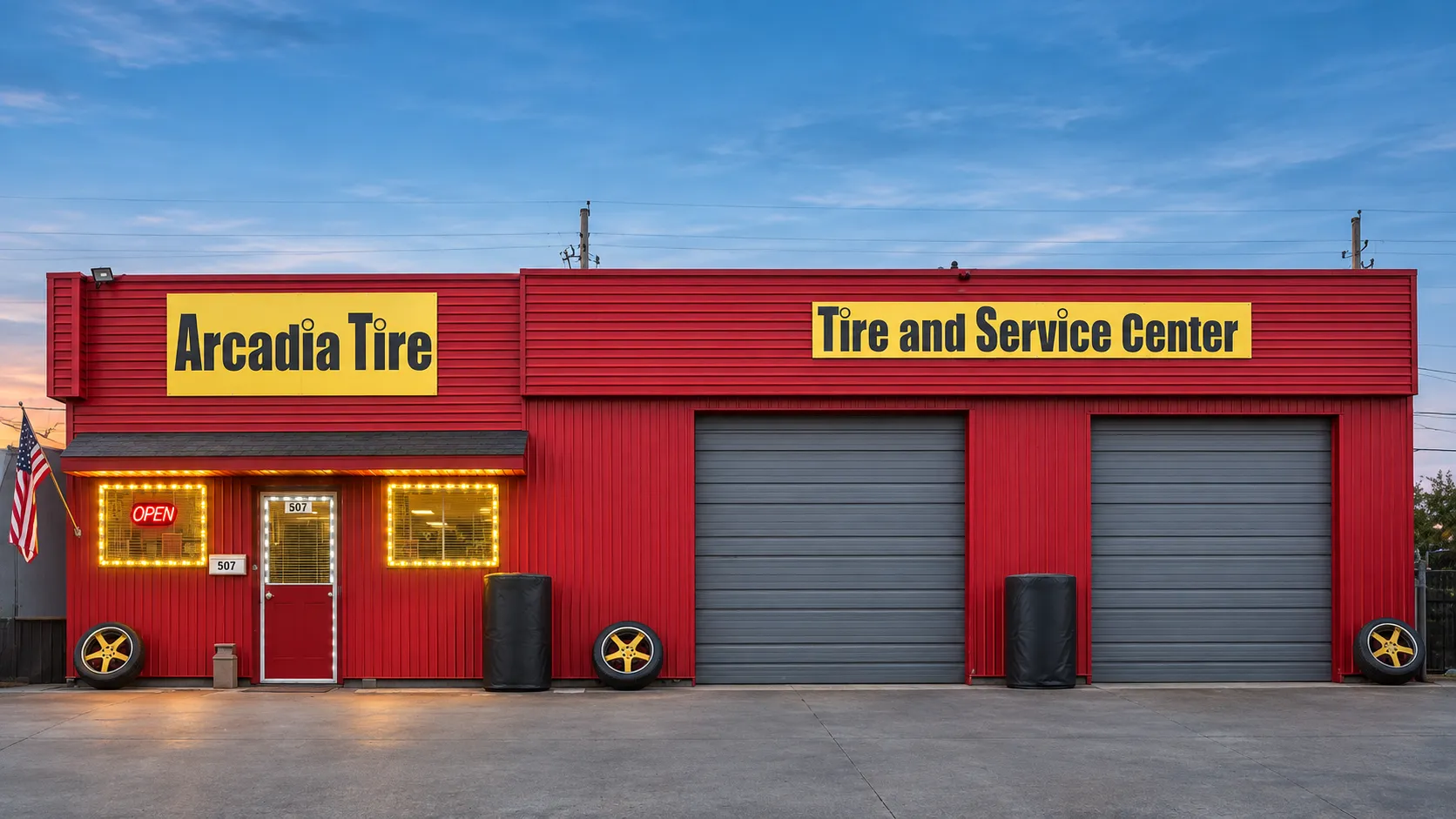
- New tires are sold and fitted at the shop, which is right outside downtown Cedar Rapids, half a block from Highway 380. The address is 507 1st Ave SW.
- How much do new tires cost?
- What a set of new tires costs depends on the size, the type of tire, the maker, how many tires go on and whether wheels go with them. The price is not on this site. Call (319) 200-2002 and ask. This site does not say which tire or shop is cheapest.
- Do you install new tires?
- Yes. We sell new tires and install them. Our tire installation page has more.
- Can I get new tires and rims together?
- Yes. Wheels and rims are sold here alongside new tires; see our wheels and rims page.
- Do you special-order tires?
- Yes. We special-order tires; our special-order tires page has more.
- Do you add air to tires?
- We check tire pressure and add air; our tire pressure check and air page covers it. The price is not on this site. Call (319) 200-2002 and ask. This site does not say that any service is free.
- How do new tires differ from used and retread tires?
- A new tire is made new from casing to tread, so it has its full tread and no history. A used tire, called part-worn in some places, has run on another vehicle and has the tread its first owner left; we sell used tires too, and our used tires page covers them. A retread is a worn tire's casing with new tread bonded onto it; we work on retreads, so ask the shop about one you have.
Need tires or a repair in Cedar Rapids?
Call (319) 200-2002, Mon-Fri 10am-6pm and Sat 1pm-5pm, or request an estimate online.